
Social media was built on a promise to help people feel more connected. But somewhere along the way, that promise got distorted. What began as sharing our lives with friends slowly became a performance, and now lives in a jungle of content served by an algorithm that forces everyone including strangers, advertisers, and increasingly AI to compete for attention.
Retro was built as a response to that. It’s a friends-only weekly photo journal that recently hit #1 on the Taiwan App Store.
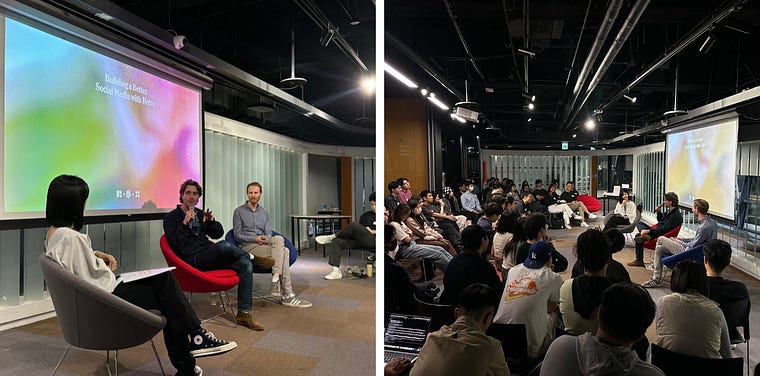
Last week, we had the pleasure of hosting the founders, Nathan Sharp and Ryan Olson, in Taipei for a fireside chat. They were in town visiting one of their hottest markets, and it turned out to be one of our favorite conversations we’ve had!
Here are 5 things we learned from our talk with them:
1. They built Retro because they wanted better social media to exist
Nathan and Ryan spent a combined 13+ years at Meta working on some of the company’s biggest products including Instagram Stories, Facebook Dating, Campus, and more. They eventually left because they saw a gap that they wanted to be met: a social app dedicated to close friends, with a business model that did not require harvesting attention.
Most consumer apps are built for a hypothetical user. Retro was built for themselves, their family, and their friends who were frustrated that an app like this didn’t already exist.
This served as a deeper fuel when things became hard that had nothing to do with metrics or pressure from investors. A genuine belief that phone addiction and social isolation are serious enough problems to work on, a small like-minded team that shared the same conviction, and a deliberate rejection of the “fail fast” mentality that Silicon Valley tends to adhere to is what kept them going on their way to millions of users.
If you’re building something where you think you’re actually like contributing to something that’s going to like lead to a better version of the future, you kind of don’t really want to fail fast. - Nathan
2. The design is the philosophy
Most social apps let you post anything, anytime, for anyone to see. Retro made an intentional choice to constrain that. You post once a week, as a kind of weekly recap, and it’s only visible to your friends.
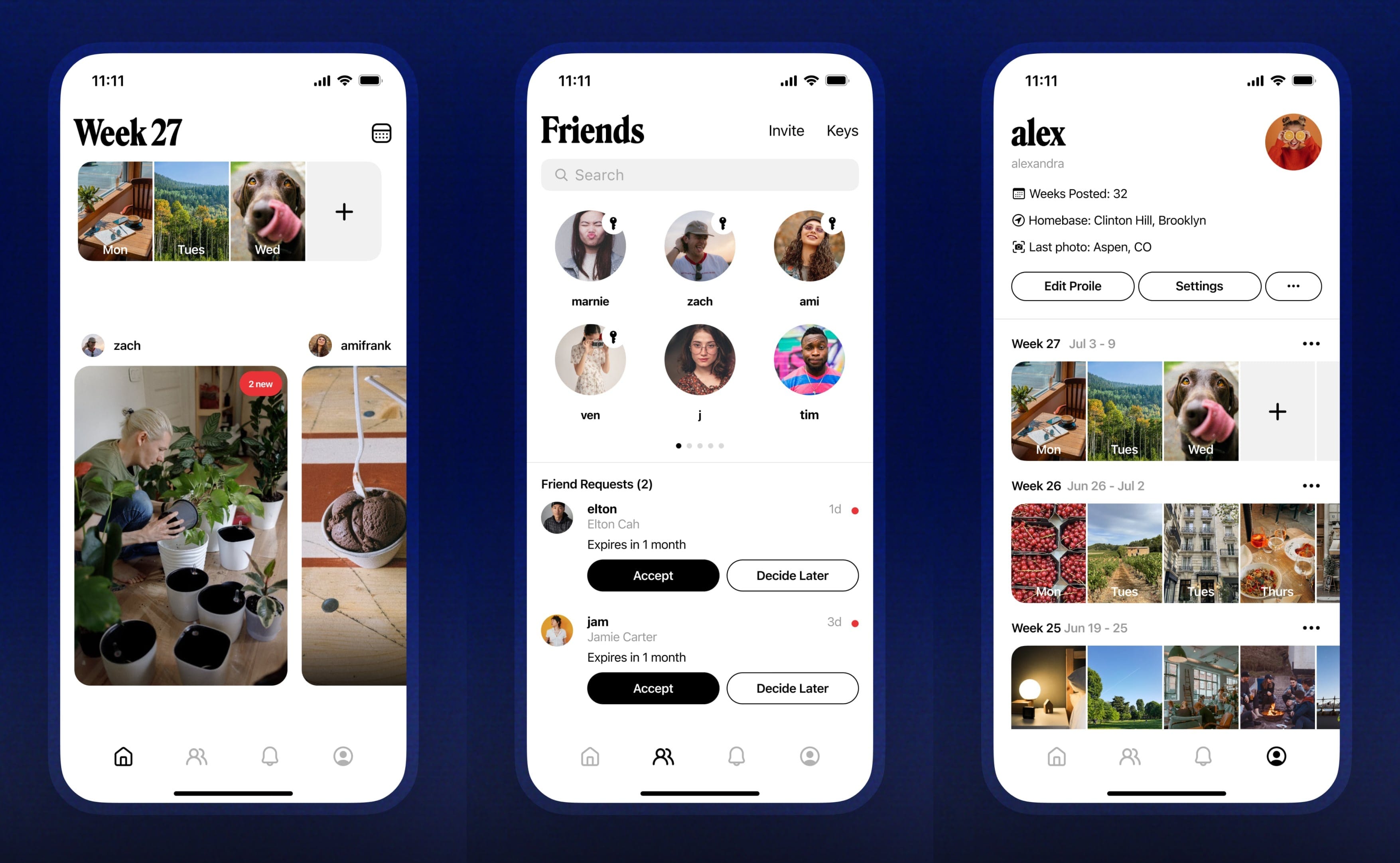
The insight came partly from a Google Photos investor who observed that most people have at least one meaningful photo per week, but not necessarily every day. This framing was built into the design philosophy of the product.
Surprisingly, this created a behavioral shift. Users started reporting that Retro made them want to take more photos, look at the world differently, and to actually go do things worth documenting. The app was creating a positive feedback loop with real life rather than competing with it.
3. Taiwan as a blueprint for social growth
Retro has over 435,000 users in Taiwan who’ve collectively posted over 1 million photos. The growth didn’t come from a big marketing push though. It came from achieving what Nathan calls “density,” which is enough friends in one place that the app works the way it’s supposed to.

Taiwanese users tend to jump on trends quickly, which meant friend networks formed fast. Once a critical mass of your friends is already on the app, when you download it yourself the experience is immediately more compelling. You don’t have to drag people in.
One counterintuitive insight from Taiwan is that engagement actually drops during Lunar New Year, when people are physically together with their families, and picks back up when they return to school or work. Being near your friends makes you want to share more with them, not less.
4. Your business model changes who you’re building for
Ad-supported social media has a structural problem that has nothing to do with the intentions of the people building it.
When your revenue is tied the amount of time spent on a platform, every product decision gets evaluated against that metric. Features that increase engagement get built and ones that would improve user wellbeing but reduce time on platform are deprioritized. Over time this compounds, and the product gets more engaging in ways that aren’t necessarily good for users.
So it’s not that “Big Tech is evil”, but more that business model they’re operating within pulls in a different direction.
They are always going to have an incentive to take more of your time, more of your attention, make the product more addictive. Even if that’s not the creators’, the engineers’, the designers’ intent, that’s the incentive at the end of the day. - Ryan
To build a business that’s aligned with users, Retro is betting that subscriptions are the way forward. And the proof that subscription supported social can work at scale is already there too. Snapchat has over $1 billion in subscription revenue and Strava runs an ad-free social network on subscriptions alone. When users pay you, you work for them.
5. Building is the best form of complaint
Nathan closed the night with a banger of a monologue. He and Ryan started Retro out of frustration with what social media had become and a belief that they could build something better. The act of building was itself the argument. It was proof that a different kind of social app was possible and that you didn’t have to choose between a great product and a business model aligned with users.
A lot of people complain about things. I think founders play a really important role in society in the sense that you’re not just deconstructing something, criticizing something. You’re actually building the solution, proving that something different can be true and be a reality. And so it’s super hard and you don’t have to do it at all phases and seasons of your life, but if you have it in you to found something and complain by actually building a better alternative, then you should do it. - Nathan
Thank you to Nathan and Ryan for coming through!
If you haven’t tried Retro yet, download it and check out the new Sticker Recap feature!
And if you want to come to more of our events and be part of our growing startup community, subscribe to our Luma calendar and join our Discord.